COPENHAGEN

2 days / 15 talks
Awesome and great blog

January 25-27

3.jpg

July 4, 2018 EurAfrican Forum

The event organized by the Portuguese Diaspora Council aims to contribute to a “prosperous and sustainable” future in Africa and Europe, exploiting synergies and promoting business opportunities with mutual benefits, valuation especially the new generations, according to Portugal’s Foreign Minister Augusto Santos Silva will soften an institutional panel on the political perspectives for future relations between Europe and Africa, with representatives from Angola, Cape Verde, Algeria, Senegal and Tunisia, among other countries.

The Cascais meeting “highlights and strengthens Portugal’s role as a privileged bridge between Europe and Africa,” according to a statement by the Portuguese Ministry of Foreign Affairs.

The Chair of the Portuguese Diaspora Council, Filipe de Botton, added that issues such as the allocation of resources and infrastructures between the two continents will be highlighted also to create a “multiplier effect” and generate wealth, “acceleration of the fourth industrial revolution in Africa and the promotion of “African Diasporas”

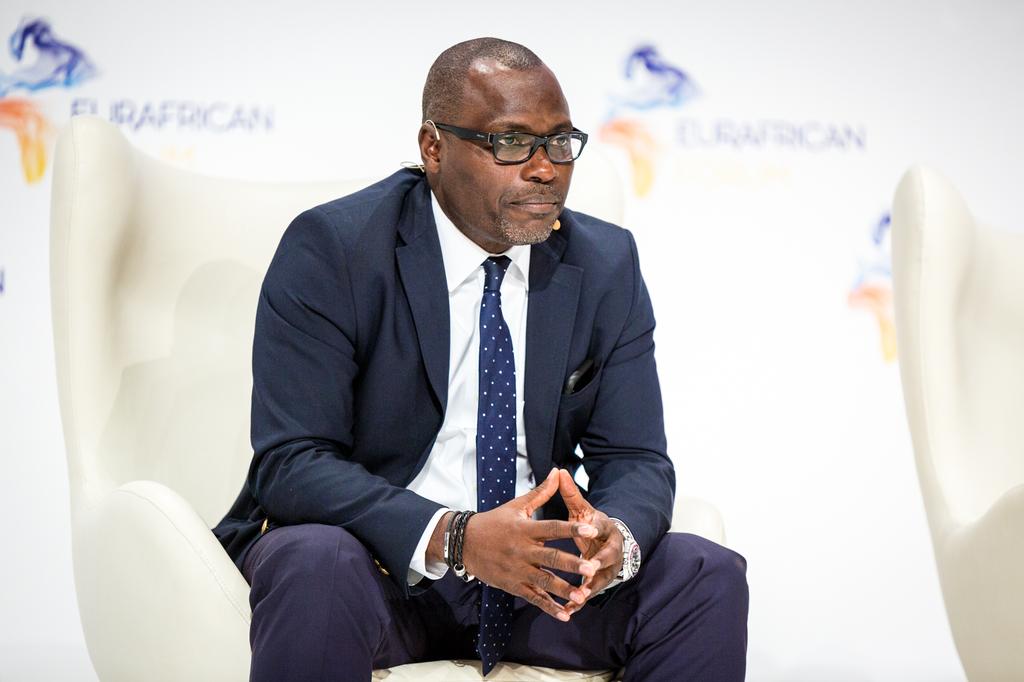
Speakers include Mariéme Jamme, Founder of I Am The Code, Sophia Bekele, CEO of CBS International and Founder and CEO of DotConnectAfrica Kola Karim, Founder and President of Shoreline Group, Hitesh Anadkat, President of First Merchant Bank, Saran Kaba Jones, Founder and President of Face Africa and Manuel Mota, including President of Mota-Engil Africa.


By Vaaju, July 2018


2.jpg

July 3, 2018 EurAfrican Forum

Kola Karim, considered by Forbes, in 2014, the fourth most powerful men in Africa, leads a conglomeration that brings together oil, gas, energy, infrastructure and construction, among other areas of business and comes to Portugal next week to participate on the 1st EurAfrican Forum, an initiative of the Portuguese Diaspora Council.

On an interview to Lusa, Karim turned up optimistic about the future of the oil industry, but admitted that an economy too dependent on this resource faces risks.  

“It is, in fact, a problem and it can be a critical factor to countries like Nigeria and Angola [the two major producers of oil in Africa] and, that’s why they need to diversify their economies. Nigeria is now focusing on agriculture, that employs a lot of people and helps feeding the country and boosts the exportations. Angola focuses on the mining sector among other areas”, highlighted the entrepreneur.  

Even so, oil has a “brilliant” future lying ahead, added.  

“Imagine the quantity of cars that exists today in Portugal, do you think that in 30 years there will be 50% of electric cars in Portugal? I don’t think so”, observed, suggesting that the oil products will increase “on a sustainable way” on the next years, following the increasing world population and the energy demand, although on an more ecologic model such as the hybrid cars, for example.

For the Shoreline president, the economic crisis that reached on a more intense way the South Europe countries, can be seen as “an opportunity” for the Portuguese companies take their products and services to Africa, namely populous countries such as Nigeria, that has more than 190 million inhabitants.

On this scope, the EurAfrican Forum will be “a great mean to construct bridges and coalitions with Portuguese companies that has Africa on their DNA” and that search “the right partner” in strategical areas such as infrastructures, oil, gas and energy.

“This is the future of Africa and these are the fields that add value to Africa”, highlighted Kola Karim.

Nigeria, leader on oil production in Africa, is among the main oil suppliers of Portugal, besides Algeria, but also it was among the major crude suppliers of the Portuguese market.

The head of Shoreline said that expects Portugal “to assume a central role” on the connection to the Sub-Saharan African countries, that goes beyond the traditional coalitions with the former colony, “looking at the whole Sub-Saharan Africa as a platform to the integration and construction of bridges to business”.

The entrepreneur advocated that “the same European continents need to give more support to the African economies” and should face the African countries as partners, but those partnerships must be beneficial for both parts.

“We have one billion people, 60% of them with under-30 on the African continent, that’s why it is also an opportunity for [the European companies] to build a dynamic sector of trade and services”, underlined, adding that Africa has at the moment two big assets: democracy “that is launching roots” on the majority of the African countries and the “capital flow” that is already retracting to the investment in Africa.

The EurAfrican Forum, that will take place on July 10, 2018, at Estoril Congress Center, aims to be a “discussion space” about common problems that affect both continents – economic, but also social and inclusion problems – and “identify opportunities for a joint action”, according to the organization.  

By Lusa, July 2018


1-1200x1136.jpg

July 2, 2018 EurAfrican Forum

At a time when climate change, demographic challenges and the technologic revolution are central pieces of the Africa’s and Europe sustainable development puzzle, it is crucial to understand what are the potentialities of the collaboration mechanisms between the two continents, to create synergies. This is the logics that led the Portuguese Diaspora Council, to organize the first EurAfrican Forum, that will take place on Tuesday, at Estoril Congress Center.

The President of the Portuguese Diaspora Council, Filipe de Botton, explains to Jornal Económico that this “is not only a forum of intentions, but also of concrete action” and it is way the selection of the speakers was on entrepreneurs, activists and businessman of a “younger generation”.

The EurAfrican Forum, that the organization expects to become an annual event, wants to become “a platform that gives voice to the aspirations and projects of a new leaders generation, allowing that contact and the relationship with the Europeans”. This edition counts with the participation of the executive director of DotConnectAfrica, Sophia Bekele, of the CEO of the Shoreline Group, Kola Karim, do CEO da Mota-Engil África, Manuel Mota, among others.  

“We wanted to raise awareness to who makes concrete actions on the field. We want to look at the future and not at the past”, says Filipe de Botton. It is why the speakers aren’t politicians, with the exception of the speech of the President of the Portuguese Republic, Marcelo Rebelo de Sousa, and of an institutional panel, moderated by the Minister of the Foreign Affairs of Portugal, Augusto Santos Silva, and that will count with the participation of representatives of many countries, among them the Minister of the External Relations of Angola, Manuel Augusto.

“We are very pleased, after the tension that happened, to see that a member of the Angolan government will be present to an official visit to Portugal to participate on this meeting”, highlights the President of the Portuguese Diaspora Council, adding that “the great mission of the Council is to create value to the country and an initiative like this, a platform between Portugal and Africa, that isn’t limited to the Lusophony, will be an excellent way of promoting Portugal”.

Filipe de Botton anticipates a participation of about 50% African representatives and 50% Europeans, between the 387 expected attendees. “We expect to create a strong contact network that will lead to the development of coalitions” states, revealing that it will be signed during the event a partnership between a Portuguese and a Nigerian company.


By Jornal Económico, July 2018