

July 11, 2018 EurAfrican Forum
Marcelo Rebelo de Sousa, the President of the Portuguese Republic, addressing the 1st Edition of the EurAfrican Forum
Marcelo Rebelo de Sousa, the President of the Portuguese Republic, addressing the 1st Edition of the EurAfrican Forum
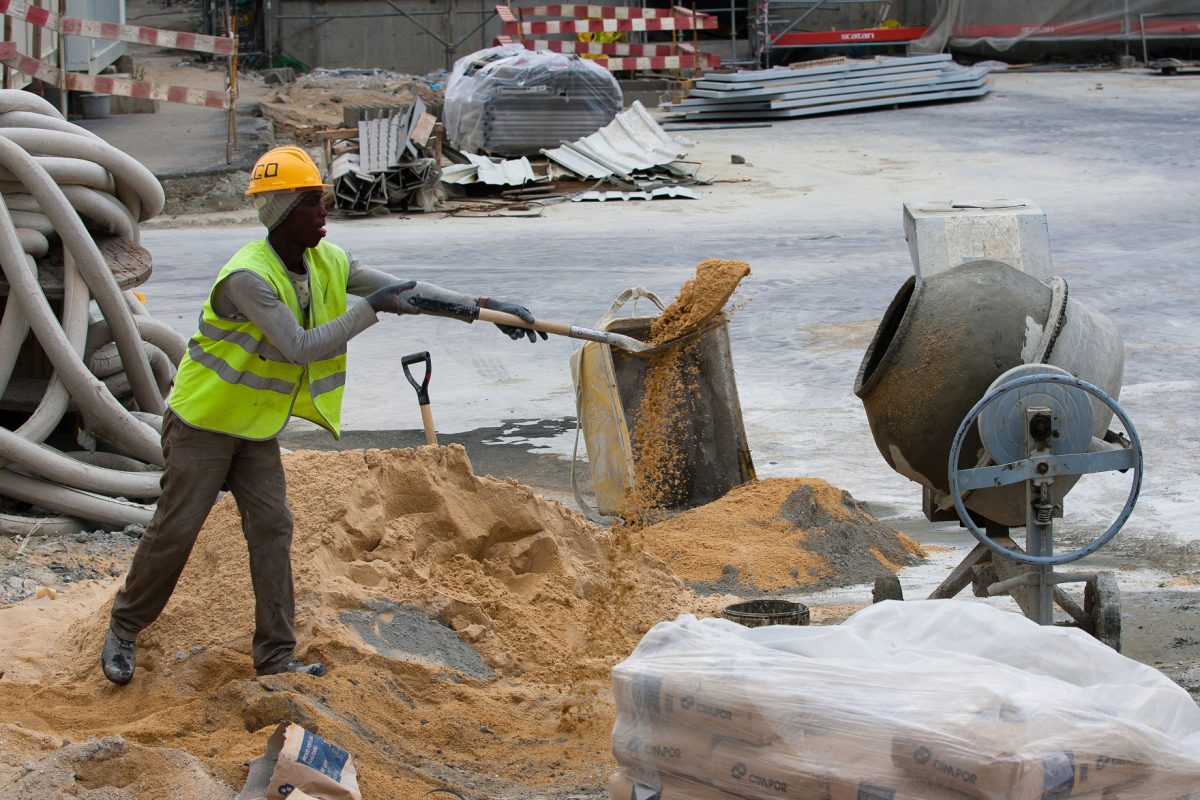
Portuguese construction company Mota-Engil SGPS SA is looking at projects in Nigeria worth as much as 1.5 billion euros ($1.8 billion) after signing a joint venture with a local company to enter Africa’s largest economy and the continent’s biggest oil producer.
“The projects in Nigeria that are currently on the table vary between 20 million euros to 1.5 billion euros,” Manuel Antonio Mota, chief executive officer of Mota’s Africa unit, said in an interview on Tuesday on the sidelines of the EurAfrican forum in Estoril, near Lisbon. “This could make a big difference to our order book.”
Mota-Engil Africa currently has a 3-billion-euro backlog in a continent where it has a strong presence in Portuguese speaking Angola. Under the new venture, Mota-Engil will hold 51 percent of Mota-Engil Nigeria Ltd. while the Shoreline Group, an independent Nigerian oil producer, will hold the remaining stake.
Mota said the timing to enter Nigeria was “just right,” citing higher demand for building projects as an increase in oil prices bolsters the state coffers of oil producers in Africa.
While the Mota-Engil group is based in Portugal, the company was originally founded in 1946 in Angola, another top oil producer in Africa. Mota said he expects Angola to soon find a solution for late payments to Mota-Engil, which were triggered by a sharp drop in oil prices that began in mid-2014. Angola accounted for more than half of Mota-Engil Africa sales last year.
“We know that Angola went through a very difficult phase economically but it’s starting to recover,” said Mota. “In terms of late payments, we think there will be a solution in the near future,” he said, without providing details. Mota-Engil Africa is currently present in 14 African countries, according to the company’s website.
“We are constantly being approached about this situation,” Mota said. “It’s not a priority at the moment.”
By Bloomberg, July 2018
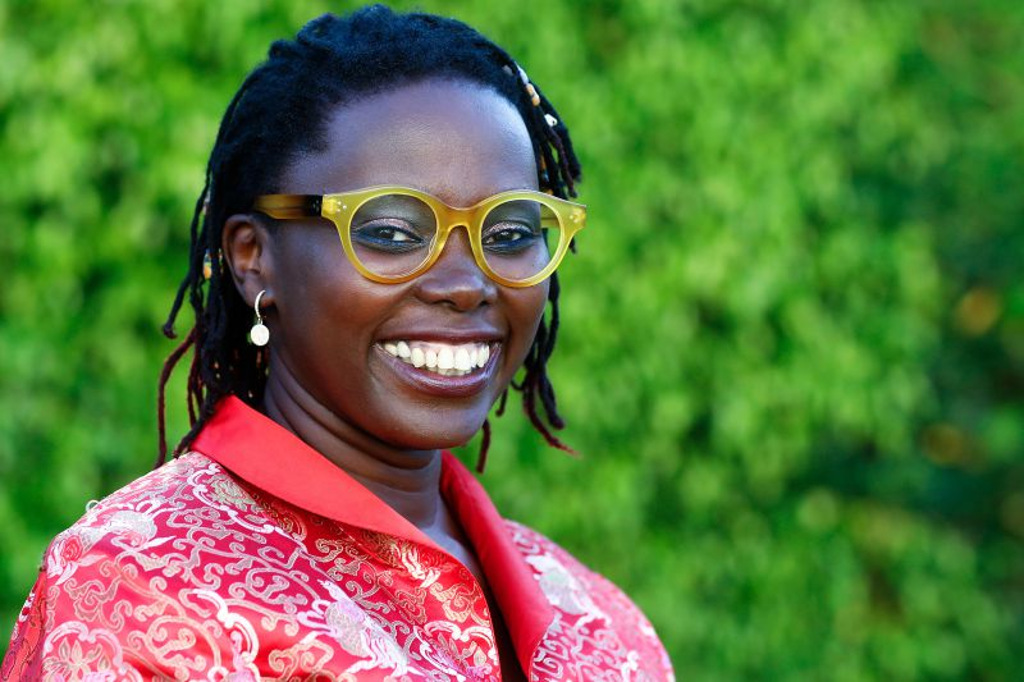
The social entrepreneur, with Senegalese background, founder of the organization I Am the Code, opens the EurAfrican Forum in Cascais, and will show how technological education can contribute to a better future. The same happened with her.
The story of Mariéme didn’t start on a happy way. Born in Senegal, she was trafficked to France with 13 years to be a prostitute and was on the streets until being rescued by the police and sent to a refugee center, as she explains to Lusa.
The late alphabetization (at 16 years old) didn’t stopped her to try a new life on the United Kingdom, where she ended up fixing and where she founded the movement ‘I Am The Code’, a project that, according to what she said on an interview to Lusa, has already reached to 10 thousand girls in 60 countries.
“Our goal is to reach one million in 2030”, having as preferential targets women and girls “that suffered from violence or live in difficult conditions”.
“We give them pride and dignity, safety, skills that they can use to stay safe at home and build their sites, becoming entrepreneurs”, stated to Lusa.
“The goal is to assure that girls aren’t trafficked to Europe, and that don’t suffer what I suffered, alone, without family, without love. This experience traumatized me a lot”, added.
Mariéme gave as na example Brazil, one of the countries where ‘I Am the Code’ is already implemented, ensuring that, in three months, helped to decrease the child propstitution in slums in 47%.
It is absolutely chocking that, in 2018, girls still live on this conditions”, regretted, stating that she wants to stop this cycle and to help girls to remain on their countries, learning how to code.
‘I Am the Code’ starts to identify girls and young women on poverty risk or that can be genital mutilation victims, marginalization or human being trafic, “that live on fragile societies”, and meet local partners to develop hteir educational programs.
Also searches for involving the governments and the private sector, besides the own communities, to help the executives to draw policies more favorable to women and “help to think with empathy and compassion”.
Feelings that Mariéme considered being underrepresented on the european migration policies. “I think that we need to look at people as people, and not as people that need help. But the political decision-makers aren’t thinking about this, they are looking to people as a burden, as a disturbance. We have to think on a friendlier way, people don’t come to Europe because they want, but because they face difficult conditions, because they are desperate”, highlighted.
Recalling her own life history, as well as her brother’s – a refugee that arrived in Italy by boat coming from Lybia and that lives nowadays on Germany – Mariéme pointed out that everyone wants “to be happy, to prosper, and feel safe”.
She hopes that the 1st edition of the EurAfrican Forum, where she participates today and that joins African and European leaders on an event directed to new generations, would assist to change the relations between Europe and Africa.
“Europe has always looked at Africans as if Africans wanted to come to Europe. But Africans don’t want to come anymore, they want to stay at home. I think that what we need to do is to find partnerships that makes sense. We need to find a balanced link between both continents, because Europe needs Africa and Africa needs Europe”, concluded.
By Lusa, Julho 2018
Mariéme Jamme, Founder of I AM THE CODE, opening the 1st Edition of the EurAfrican Forum with the theme Crafting Coalitions for Change
Vel illum dolore eu feugiat nulla facilisis at vero eros et accumsan et iusto odio dignissim qui blandit praesent luptatum zzril delenit augue duis dolore te feugait nulla
Vel illum dolore eu feugiat nulla facilisis at vero eros et accumsan et iusto odio dignissim qui blandit praesent luptatum zzril delenit augue duis dolore te feugait nulla
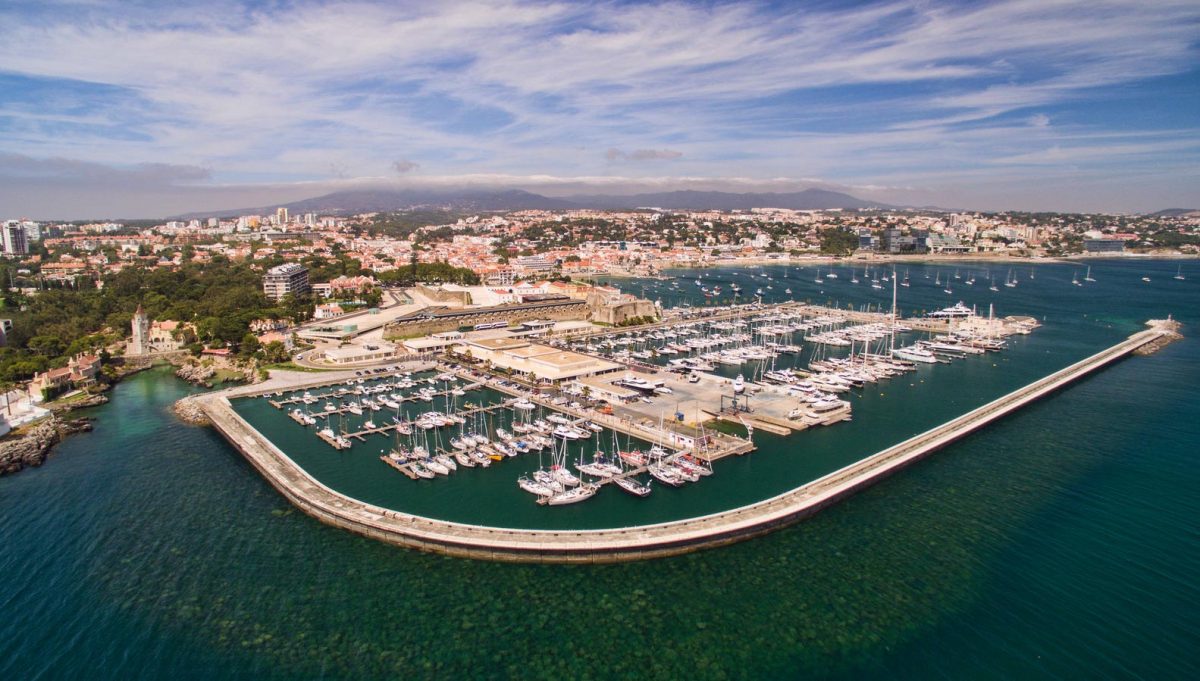
The event, organized by the Council of the Portuguese Diaspora, intends to contribute to a “prosperous and sustainable” future in Africa and Europe, taking advantage of synergies and promoting business opportunities with mutual benefits, valuing the younger generations above all, according to the event’s organisers.
Portuguese Foreign Minister Augusto Santos Silva will moderate an institutional panel on political outlooks for future relations between Europe and Africa, in which representatives from Angola, Cape Verde, Algeria, Senegal and Tunisia, and other ocuntries, will take part.
The meeting in Cascais “showcases and reinforces the role of Portugal as a privileged bridge between Europe and Africa,” according to a statement from the Portuguese Ministry of Foreign Affairs.
The president of the Council of the Portuguese Diaspora, Filipe de Botton, added that issues such as sharing of resources and infrastructures between the two continents will also be a focus, in order to create a “multiplying effect” and generate wealth, “accelerate of fourth industrial revolution” in Africa and promote the “African diasporas”.
Speakers include Mariéme Jamme, founder of I Am The Code; Sophia Bekele, president of CBS International and founder and CEO of DotConnectAfrica; Kola Karim, founder and president of the Shoreline Group; Hitesh Anadkat, president of First Merchant Bank; Saran Kaba Jones, founder and president of Face Africa and Manuel Mota, the president of Mota-Engil Africa, among others.
The forum will be chaired by former Portuguese prime minister, former president of the European Commission and current non-executive chairman of Goldman Sachs, José Manuel Durão Barroso.
By The Portugal News Online, July 2018

The event organized by the Portuguese Diaspora Council aims to contribute to a “prosperous and sustainable” future in Africa and Europe, exploiting synergies and promoting business opportunities with mutual benefits, valuation especially the new generations, according to Portugal’s Foreign Minister Augusto Santos Silva will soften an institutional panel on the political perspectives for future relations between Europe and Africa, with representatives from Angola, Cape Verde, Algeria, Senegal and Tunisia, among other countries.
The Cascais meeting “highlights and strengthens Portugal’s role as a privileged bridge between Europe and Africa,” according to a statement by the Portuguese Ministry of Foreign Affairs.
The Chair of the Portuguese Diaspora Council, Filipe de Botton, added that issues such as the allocation of resources and infrastructures between the two continents will be highlighted also to create a “multiplier effect” and generate wealth, “acceleration of the fourth industrial revolution in Africa and the promotion of “African Diasporas”
Speakers include Mariéme Jamme, Founder of I Am The Code, Sophia Bekele, CEO of CBS International and Founder and CEO of DotConnectAfrica Kola Karim, Founder and President of Shoreline Group, Hitesh Anadkat, President of First Merchant Bank, Saran Kaba Jones, Founder and President of Face Africa and Manuel Mota, including President of Mota-Engil Africa.
By Vaaju, July 2018
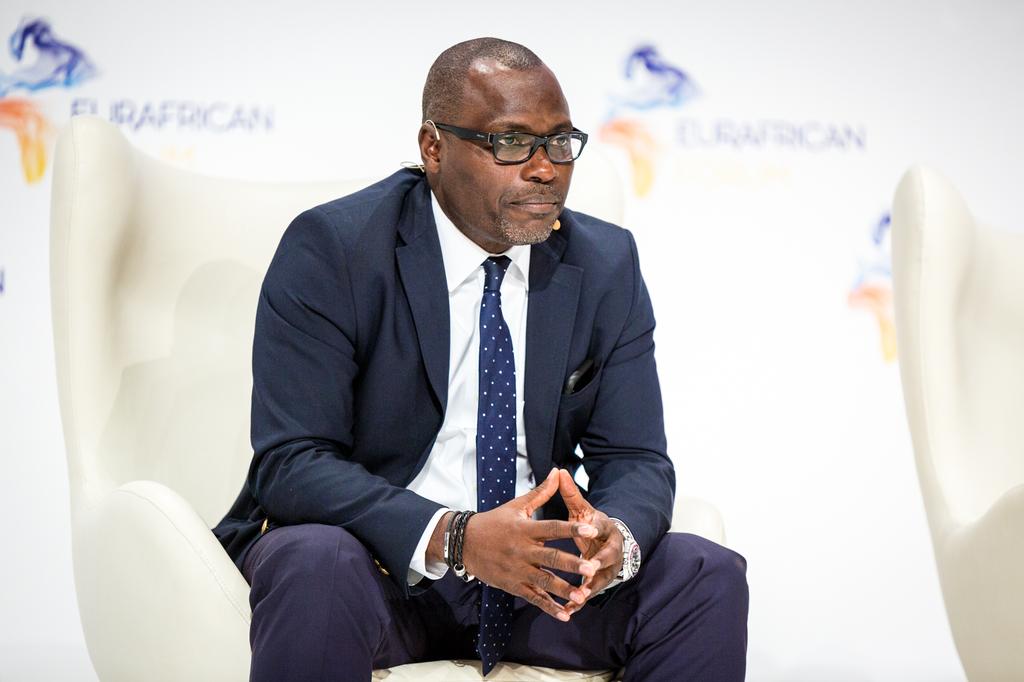
Kola Karim, considered by Forbes, in 2014, the fourth most powerful men in Africa, leads a conglomeration that brings together oil, gas, energy, infrastructure and construction, among other areas of business and comes to Portugal next week to participate on the 1st EurAfrican Forum, an initiative of the Portuguese Diaspora Council.
On an interview to Lusa, Karim turned up optimistic about the future of the oil industry, but admitted that an economy too dependent on this resource faces risks.
“It is, in fact, a problem and it can be a critical factor to countries like Nigeria and Angola [the two major producers of oil in Africa] and, that’s why they need to diversify their economies. Nigeria is now focusing on agriculture, that employs a lot of people and helps feeding the country and boosts the exportations. Angola focuses on the mining sector among other areas”, highlighted the entrepreneur.
Even so, oil has a “brilliant” future lying ahead, added.
“Imagine the quantity of cars that exists today in Portugal, do you think that in 30 years there will be 50% of electric cars in Portugal? I don’t think so”, observed, suggesting that the oil products will increase “on a sustainable way” on the next years, following the increasing world population and the energy demand, although on an more ecologic model such as the hybrid cars, for example.
For the Shoreline president, the economic crisis that reached on a more intense way the South Europe countries, can be seen as “an opportunity” for the Portuguese companies take their products and services to Africa, namely populous countries such as Nigeria, that has more than 190 million inhabitants.
On this scope, the EurAfrican Forum will be “a great mean to construct bridges and coalitions with Portuguese companies that has Africa on their DNA” and that search “the right partner” in strategical areas such as infrastructures, oil, gas and energy.
“This is the future of Africa and these are the fields that add value to Africa”, highlighted Kola Karim.
Nigeria, leader on oil production in Africa, is among the main oil suppliers of Portugal, besides Algeria, but also it was among the major crude suppliers of the Portuguese market.
The head of Shoreline said that expects Portugal “to assume a central role” on the connection to the Sub-Saharan African countries, that goes beyond the traditional coalitions with the former colony, “looking at the whole Sub-Saharan Africa as a platform to the integration and construction of bridges to business”.
The entrepreneur advocated that “the same European continents need to give more support to the African economies” and should face the African countries as partners, but those partnerships must be beneficial for both parts.
“We have one billion people, 60% of them with under-30 on the African continent, that’s why it is also an opportunity for [the European companies] to build a dynamic sector of trade and services”, underlined, adding that Africa has at the moment two big assets: democracy “that is launching roots” on the majority of the African countries and the “capital flow” that is already retracting to the investment in Africa.
The EurAfrican Forum, that will take place on July 10, 2018, at Estoril Congress Center, aims to be a “discussion space” about common problems that affect both continents – economic, but also social and inclusion problems – and “identify opportunities for a joint action”, according to the organization.
By Lusa, July 2018